
Keys and song versions
Keep alternate keys and arrangements clear in your repertoire. Use consistent names, select the intended concert version and record rehearsal decisions.
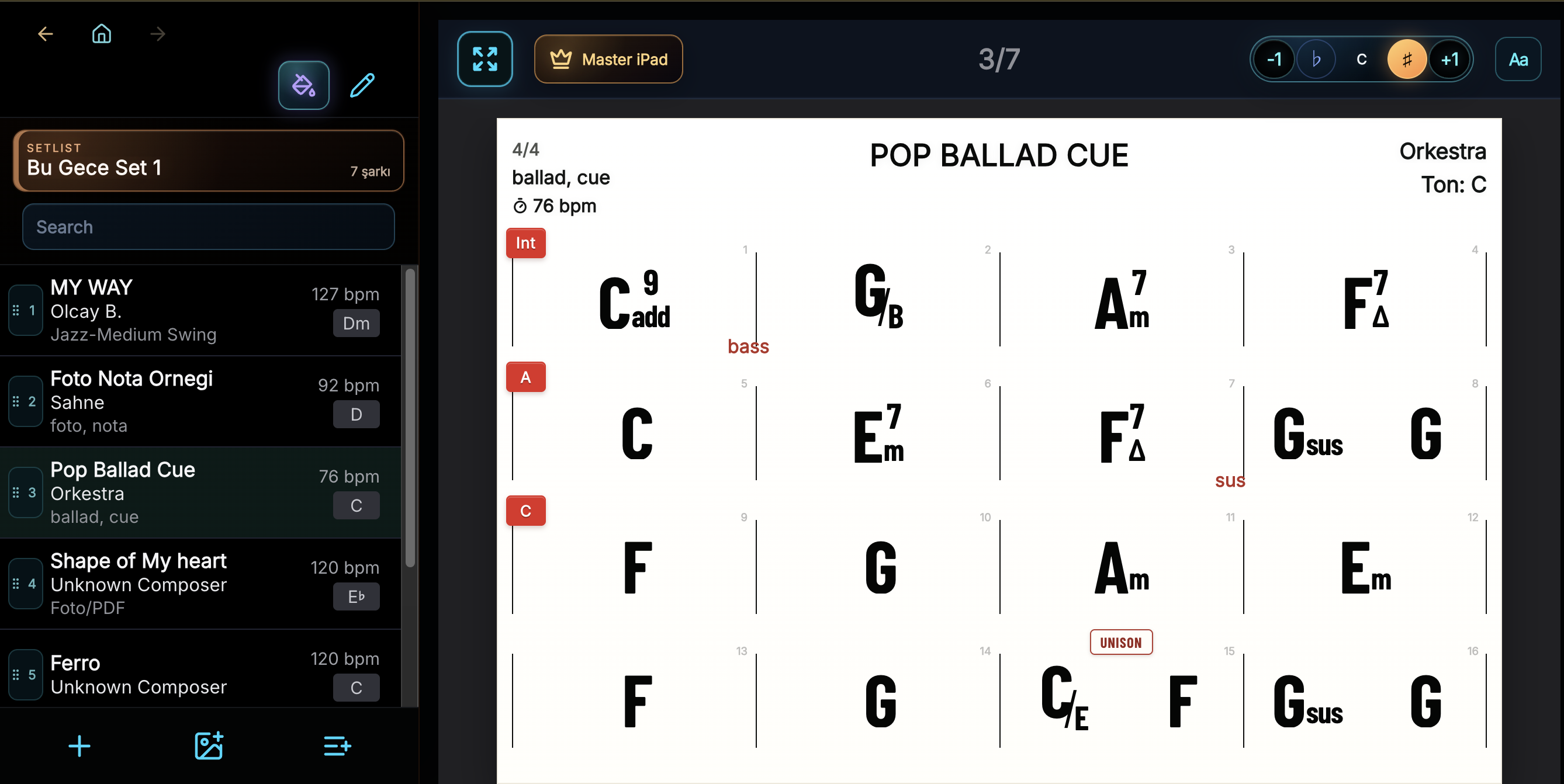
Separate the song from the arrangement
The same song can use different keys or forms with another vocalist, band or performance. A title alone may leave the intended arrangement unclear. Consider the underlying song identity, then the key and arrangement for this particular work. Choose a naming approach you can reuse.
A teaching example might be Piece A — acoustic — A minor — 16 November rehearsal. This is a suggested organisation method rather than an automatic naming feature. Decide which details belong in the title and which belong in working notes throughout your own archive.
Write the key with its context
A key name may not describe the whole preparation. A vocalist’s preference, instrument tuning or acoustic arrangement can lead to different decisions. Record the agreed key for that concert or rehearsal alongside any relevant instrument information. The reader should be able to identify the intended version.
After a key change, review all related information. The title, chord notes and rehearsal decision should agree. A key field does not establish that every musical detail has changed correctly. Check the resulting page with your instrument.
Describe differences in song form
A short arrangement, extended solo, repeated chorus or alternate ending can require a separate working version. Use a note describing the actual difference instead of relying only on labels such as new or final. Section names and repeat decisions let the rehearsal conversation correspond to the page.
For example, make clear whether the band returns to the chorus after the solo or goes straight to the ending. Before creating another copy for a small correction, consider whether updating the current note is sufficient. Identify arrangements that genuinely need separate versions clearly.
Select the intended concert version
Explore FeraStage Songs for collecting repertoire and Setlists for one rehearsal or performance order. When preparing a set, check the version as well as the song title. Make this a regular step if you work with different vocalists or groups.
Start with a three-song archive. Give one piece two arrangements and explain which belongs in the set. This tests the naming approach before you move the whole repertoire. Reopen the saved work and check that you reach the intended page.
Update the archive after rehearsal
Record the agreed key, form and ending after rehearsal. If you retain an older arrangement, leave its purpose clear. Review the recorded decisions when preparing the next set so that future work starts from usable information.
- Names distinguish songs and arrangements.
- Keys and working notes agree.
- The concert version is identified.
- Accepted rehearsal decisions are current.
Bring it into FeraStage
Explore Songs for your repertoire and Setlists for a particular concert or rehearsal order. Begin by organising a small example archive.
Explore FeraStage SongsCreate your account